What does this study cover?
Electronic warfare (EW) is the totality of military activities aimed at controlling the electromagnetic spectrum: it seeks to ensure that friendly forces can use the spectrum effectively whilst preventing or minimising the enemy’s use of it.
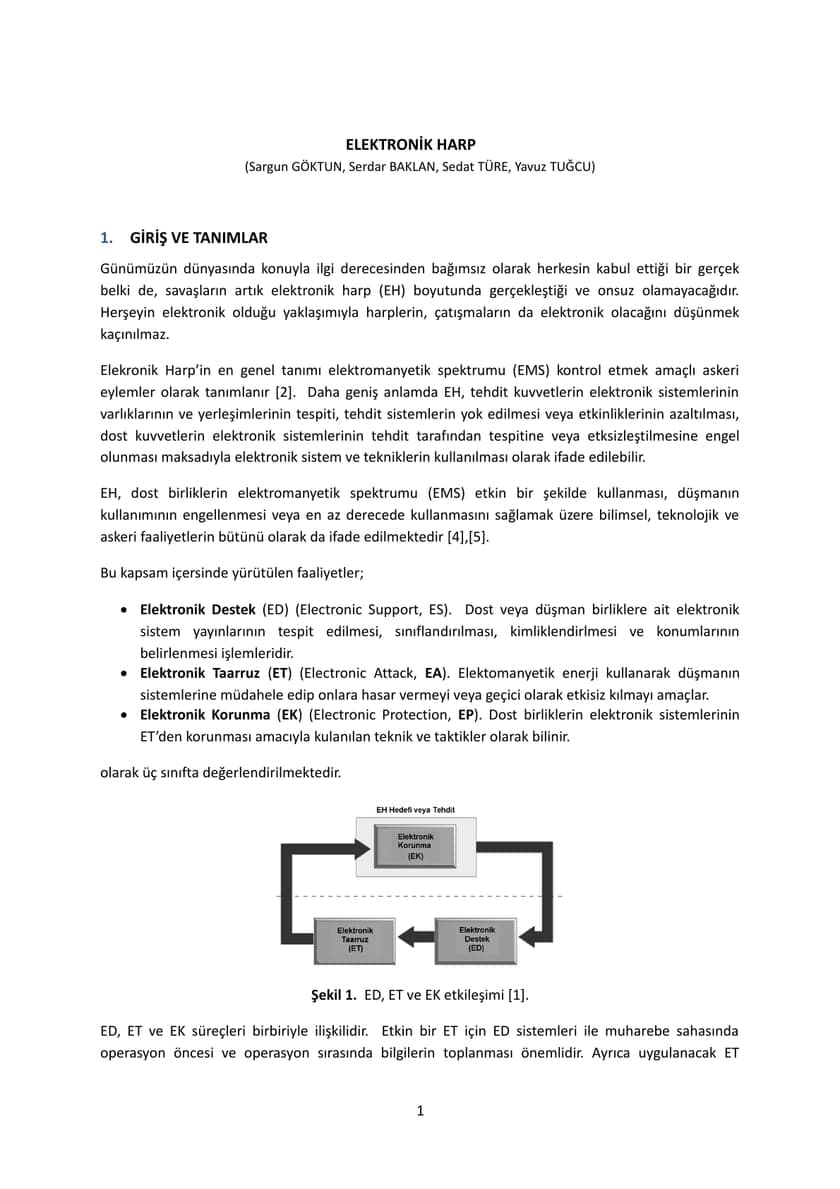
This study examines the three areas that constitute EW—namely, Electronic Support (ES), Electronic Attack (EA) and Electronic Protection (EP)—through their definitions, examples of applications and their interrelationships. It then discusses the intersection of EW with cyberspace, cognitive electronic warfare and the future of the field.
Key findings
- ES, EA and EP cannot be considered in isolation from one another. An effective electronic attack relies on information gathered by electronic support systems both before and during an operation; the choice of defence method also depends on the attack technique employed.
- Cyberspace and the electromagnetic spectrum are now viewed as a single, continuous and simultaneous environment. For this reason, cyberspace must also be treated as a distinct theatre of war, just like land, sea, air and space.
- Today’s EW systems operate based on known threats and pre-defined countermeasure databases; they struggle to adapt rapidly to new threats, such as adaptive radars. Cognitive EW, based on signal processing, intelligent algorithms and machine learning, aims to provide autonomous responses without the need for reprogramming.
- The accurate identification of friendly and hostile elements within the Electronic Order of Battle (EOB), starting from peacetime, is of vital importance; software can analyse a large number of meaningless signals to reveal the presence of specific systems.
- Key requirements for the future of EW include: systems with high computing power yet small, lightweight and low-cost; multi-functional, reprogrammable and wide-spectrum solutions; directed-energy weapons; the integration of EW and cyber warfare under a common concept; and EW systems based on artificial intelligence and swarm intelligence.
MilSOFT’s experience in electronic warfare
The final section of the study outlines MilSOFT’s expertise in this field. The EW Programming and Simulation Centre, established for EW systems on naval and air platforms, prepares mission data files on the ground using hardware-in-the-loop simulation; EW database development and post-mission analysis software are also part of this infrastructure.
The Joint EW Simulation (MEHSİM), developed for the training of EW personnel, comprises two applications: the JETS e-learning application and the JETSIM simulation, in which trainees can play against each other on a computer or as blue and red forces.
Who is it for?
- Personnel responsible for planning EW operations and making decisions in this field
- Engineers and technical teams working on EW, ELINT and EW databases
- Units and training centres responsible for planning EW training
- Defence industry professionals and academics seeking a comprehensive introduction to the subject