
Train Tactical Data Link Simulator
TDLSIM
Verify tactical data link compatibility before heading out into the field
TDLSIM is a Tactical Data Link Simulator (TDLS) developed in Türkiye by MilSOFT; it simulates NATO-standard tactical data link protocols such as Link 11, Link 16, Link 22 and JREAP in a software environment without the need for actual terminal hardware.
- Simulation Infrastructure Refined Since 2005
- Interoperability Validated in NATO CWIX Exercises
How It Works
From model to live implementation: four steps
Illustrative flow - 01 / 04
The geographical and operational aspects of the tactical environment are modelled on the PiriMap-based mapping infrastructure, using NATO APP 6B symbology and DTED elevation data.
Tactical data link terminals and host systems are operated at the software level rather than on physical hardware; the Link 16, Link 22, JREAP and SIMPLE protocols are supported.
J-messages and JREAP messages are parsed structurally; their content can be examined, generated, recorded, played back, blocked, delayed and customised.
The system can participate in live exercises by connecting to a real tactical data network; it interoperates with external simulation systems via HLA and DDS middleware.
This sequence is no coincidence; it is a direct reflection of the collaboration between TACENV and Gateway
Problem
The problem is not the protocol itself; it is the inability to test this protocol reliably without the actual hardware
Tactical data link systems such as Link 16 and Link 22 are traditionally tested in hardware-dependent environments that require actual MIDS terminals and operational network access. This both increases development costs and limits the flexibility of test scenarios.
A physical hardware setup is required for every configuration change; separate testing and analysis tools have to be used for each tactical data link; and setting up and repeating scenario-based exercise environments becomes more difficult.
This need is not new; however, as the number of platforms and systems integrated into the tactical data link increases, having to wait for a separate hardware installation for each new integration is causing the test schedule to be delayed more and more.
Developer / Integrator
For every configuration change, they have to repeat the physical hardware setup from scratch.
Systems architect
It needs a separate tool for each tactical data link; it cannot set up an integrated, single testing environment.
Operations / Test team
It becomes more difficult to set up scenario-based exercise environments and to run the same scenario again.
Organisation
Due to hardware dependency, the cost and duration of testing and training processes increase.
The main requirement is to be able to test the protocol reliably and reproducibly in a hardware-independent environment
Solution
Compatibility is verified in a simulation, not in the field
The solution is to move the protocol from the physical hardware to the software environment. Without terminal hardware, all elements of the tactical data link network are simulated at the software layer; testing, analysis and training are carried out within the same controlled environment.
This environment can also be connected to a real tactical data network — the software environment and live exercises converge where required.
Product
What is TDLSIM?
Developed in Türkiye by MilSOFT, TDLSIM is a Tactical Data Link Simulator (TDLS) that emulates NATO-standard tactical data link protocols—such as Link 11, Link 16, Link 22 and JREAP—in a software environment without the need for actual terminal hardware.
It consists of two main modules: TACENV, which models the tactical environment, and Gateway, which performs network gateway functions. Built upon a simulation infrastructure that has been utilised and refined in various simulator projects since 2005, the system has been tested in NATO CWIX interoperability exercises.
TDLSIM is not a general-purpose network simulator; it is a tactical data link simulator that emulates different tactical data link protocols in a hardware-independent environment suitable for testing and training
Capabilities
Tactical Environment Modelling (TACENV)
With the PiriMap-based Geographic Information System (GIS), developed in Türkiye, tactical symbols and track data are visualised on a realistic map background; NATO APP 6B symbology and elevation data in DTED format are supported.
Scenario Generation and Reproducibility
Thanks to the scenario creation, recording, playback and replay functions, the same tactical situation can be run over and over again with different parameters.
Terminal and Host Emulation (Gateway)
By operating as both a MIDS BU-2 Type A, D, I, J and R terminal and a host system, end-to-end data link behaviour is tested without the need for a physical terminal.
Message-Level Analysis
J, F/FJ, M-series and JREAP messages are parsed structurally; the content of each message can be analysed, generated, recorded, played back, blocked, delayed and customised.
Beyond-Line-of-Sight Data Link Support
With the support of JREAP-C, beyond-line-of-sight data link capability is validated in a simulation environment.
Integration with Distributed Simulation
Thanks to HLA/DIS and DDS middleware support, it integrates into distributed exercise architectures that require interoperability with external simulation systems.
The Difference
Why TDLSIM?
What should you look for in a tactical data link simulator?
There are two common limitations in this field: every configuration change requires physical hardware setup; and a separate tool is used for each tactical data link. TDLSIM does not suffer from either of these limitations.
It is hardware-independent.
It tests end-to-end data link behaviour without the need for a real MIDS terminal.
It supports different tactical data links in one environment.
No separate tools are needed for Link 11, Link 16, Link 22 and JREAP; J, F/FJ, M-series and JREAP messages are parsed, analysed, generated and logged in the same environment.
It is based on a well-established infrastructure.
It is built on a simulation infrastructure that has been used in various simulator projects since 2005.
It combines the real and virtual worlds.
By connecting to a real tactical data network, they can also take part in a live exercise.
It is open to distributed architectures.
It works in conjunction with external simulation systems, supported by HLA/DIS and DDS middleware.
NATO FMN Compliance
TDLSIM has successfully demonstrated compliance with NATO FMN standards in CWIX exercises, supporting seamless joint operations capability among NATO and coalition forces.
Use Cases
Development and Integration Testing
Analysis of Link 11/16/22 network behaviour, message-level (J, F/FJ, M-series and JREAP) protocol testing and verification of platform integration are carried out within this scope.
Operational Readiness Training
They are used in the training of units that will be integrated into the tactical data link, such as command and control systems, airborne platforms and unmanned systems.
Conducting Scenario-Based Exercises
It is used in simulation environments where the same tactical scenario needs to be run repeatedly with different parameters.
NATO Interoperability Exercises
The system, which is currently in operational use at several national defence organisations, has also played an active role in NATO CWIX interoperability exercises.
Technology and Standards
Architecture
- Modular structure
- TACENV (tactical environment module) and Gateway (network gateway module).
- Mapping infrastructure
- PiriMap (Geographic Information System developed in Türkiye); NATO APP 6B symbology; elevation data in DTED format.
- Terminal emulation
- Capability to function as both a MIDS BU-2 Type A, D, I, J and R terminal and a host system.
- Maturity
- The simulation infrastructure, which has been in use and under development since 2005, has been tested in NATO CWIX exercises.
Supported Protocols
- Tactical data link
- STANAG 5511 (Link 11), STANAG 5516 (Link 16), STANAG 5522 (Link 22)
- Beyond-line-of-sight data link
- STANAG 5518 (JREAP)
- Distributed simulation and network protocols
- STANAG 5602 SIMPLE, HLA, DIS, DDS
Who Is It For?
Decision-maker
The ability to scale up testing and training capacity without being dependent on hardware.
Systems Architect / Integrator
With the TACENV and Gateway modules, you can verify platform integration without having to wait for hardware to be set up.
Developer
The ability to directly test protocol compliance by parsing and analysing J, F/FJ, M-series and JREAP messages.
Operations / Training team
The ability to run scenario-based exercises repeatedly using the record and play-back functions.
Organisation
The ability to standardise the testing and training process using an infrastructure that has been developed since 2005 and tested in NATO CWIX exercises.
Capability - Train
Related Solutions
 Train Joint Electronic Warfare Simulation JETSIM JETSIM is a scenario-based joint electronic warfare simulation platform for the army, navy and air force. Explore
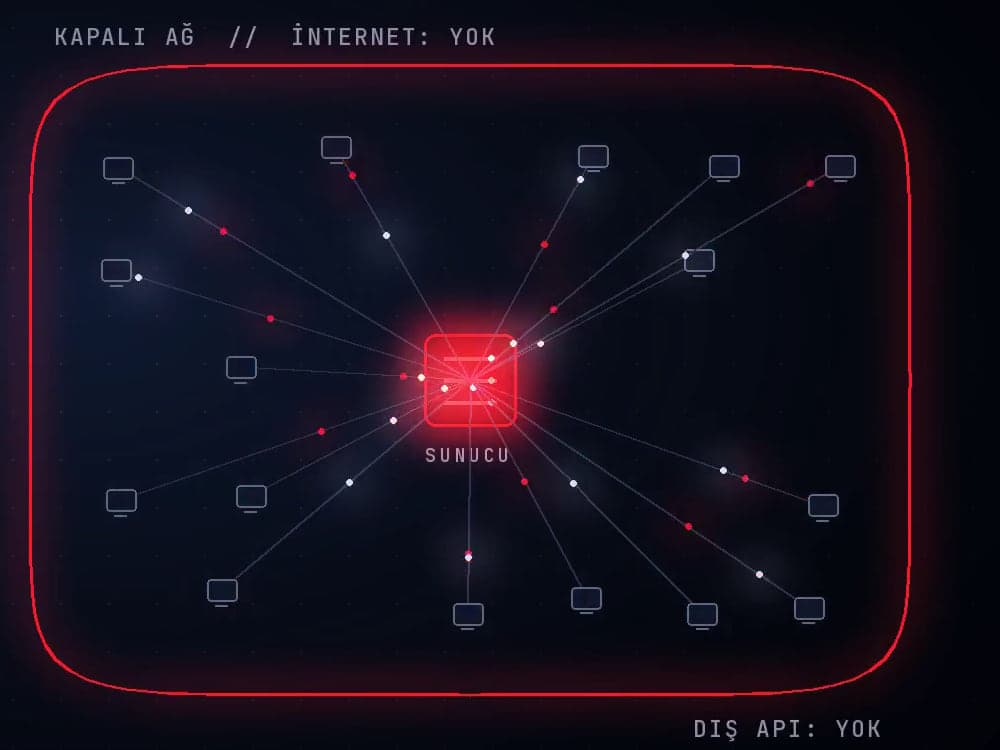 Augment In-House AI Assistant MilSOFT AI MilSOFT AI is an AI assistant that operates within your organisation’s infrastructure without requiring an internet connection; it supports Turkish in Office, PDF, desktop and web applications. Explore
 Sense Data Distribution Unit Mil-DDU Mil-DDU is a Data Distribution Unit (DDU) developed in Türkiye by MilSOFT, which centrally collects and processes data of varying structures from navigation, meteorological and communications systems, and distributes it in real time to the relevant platform subsystems. Explore

Next Step
Verify tactical data link compatibility before heading out into the field
TDLSIM simulates the Link 11, Link 16, Link 22 and JREAP protocols in a hardware-independent environment; it combines testing, analysis and training on a single platform. This infrastructure, which has been maturing since 2005, has been validated in NATO CWIX exercises.
There are three ways to evaluate TDLSIM within your own platform or system architecture:
- 01 Request the technical assessment package Along with the list of supported protocols and the module documentation.
- 02 Plan an integration workshop Let’s carry out a joint assessment of your current platform or system architecture.
- 03 Launch the proof of concept (PoC) Carry out a limited-scope test based on a scenario you have defined.